
Table of Contents
Introduction
Feeling tired after a busy day is common, but persistent fatigue that continues despite getting enough sleep may indicate that your sleep is not as restorative as it should be. Sleep plays an important role in physical recovery, memory, concentration, and overall health. When sleep is repeatedly interrupted or disrupted, you may wake up feeling unrefreshed and experience symptoms throughout the day. Recognizing common warning signs can help you determine when it may be appropriate to discuss your sleep concerns with a healthcare professional.
What Is Persistent Fatigue?
Persistent fatigue refers to ongoing tiredness or low energy that does not improve adequately with regular rest or a normal night’s sleep. Unlike occasional tiredness, persistent fatigue can interfere with work, daily responsibilities, exercise, and social activities. While fatigue can have many possible causes, poor-quality or disrupted sleep is one factor that should be considered.
Feeling Tired Despite Getting Enough Sleep
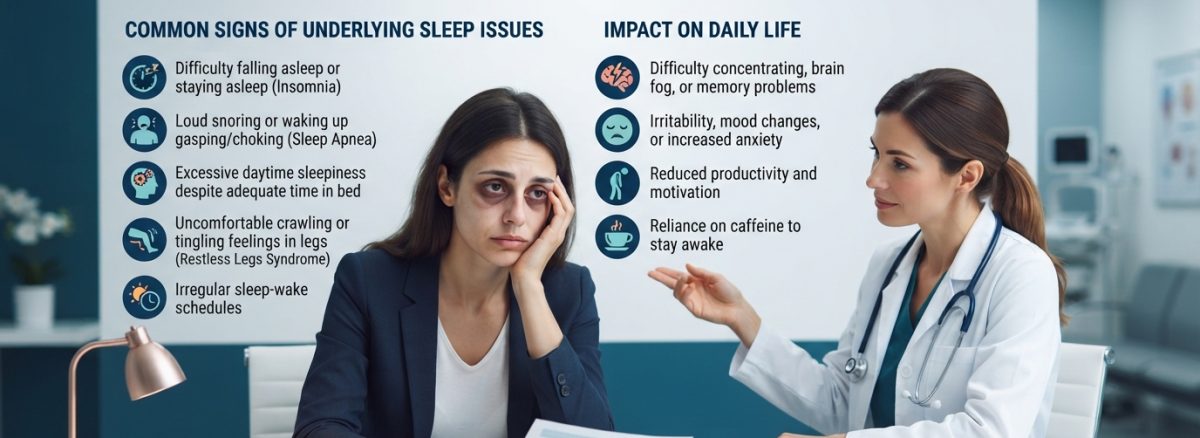
Getting seven to nine hours of sleep does not always mean you are receiving enough restorative sleep. Conditions that repeatedly interrupt breathing or cause frequent awakenings may reduce sleep quality without you fully remembering the disruptions. As a result, you may wake up feeling tired even after spending adequate time in bed.
Daytime Sleepiness and Difficulty Concentrating
Excessive daytime sleepiness can be another indication of disrupted nighttime sleep. You may feel unusually sleepy while working, reading, watching television, or sitting quietly. Poor sleep can also affect concentration, memory, reaction time, and mental alertness. Difficulty staying focused during routine activities may be worth discussing with a healthcare professional, especially when it occurs regularly.
Morning Headaches
Morning headaches can sometimes occur when sleep quality is poor. In some cases, disrupted breathing during sleep may contribute to changes in oxygen and carbon dioxide levels that can be associated with morning headaches. Recurring headaches after waking, particularly when combined with loud snoring or daytime sleepiness, may warrant further evaluation.
Loud Snoring and Nighttime Awakenings
Loud, frequent snoring can be more than an annoyance. It may occur when airflow is partially restricted during sleep. Frequent nighttime awakenings, restless sleep, or waking several times without an obvious reason can also prevent the body from progressing normally through sleep stages.
Gasping or Choking During Sleep
Waking up gasping, choking, or feeling short of breath during sleep is an important symptom to take seriously. These episodes may occur when breathing becomes repeatedly interrupted during sleep. If a bed partner notices pauses in breathing followed by gasping or loud snoring, sharing this information with a healthcare professional can be helpful.
Fatigue and Possible Sleep Disorders
Persistent fatigue can be associated with several sleep-related conditions, including obstructive sleep apnea, insomnia, restless legs syndrome, and other disorders that interfere with restorative sleep. Obstructive sleep apnea, for example, can cause repeated interruptions in breathing and sleep throughout the night. However, fatigue is not specific to sleep disorders and may also be related to other medical, lifestyle, or psychological factors. A proper evaluation is important before determining the underlying cause.
When Should You Consider a Professional Evaluation?
Consider discussing persistent fatigue with a healthcare professional when it continues despite adequate sleep or begins affecting your daily activities. Professional evaluation may be especially appropriate if fatigue occurs along with loud snoring, gasping or choking during sleep, frequent nighttime awakenings, morning headaches, excessive daytime sleepiness, or difficulty concentrating. Depending on your symptoms and health history, a provider may recommend further assessment, including a sleep evaluation or sleep study.
Conclusion
Persistent fatigue should not always be dismissed as simply being busy or not getting enough rest. When tiredness occurs despite adequate sleep and is accompanied by symptoms such as daytime sleepiness, morning headaches, loud snoring, nighttime awakenings, or gasping during sleep, it may be helpful to explore whether an underlying sleep problem is contributing. For individuals in New Braunfels, TX, discussing ongoing fatigue and sleep-related symptoms with a qualified healthcare professional can be an important step toward understanding the potential cause and supporting better overall health.
Leave feedback about this