
Table of Contents
Introduction
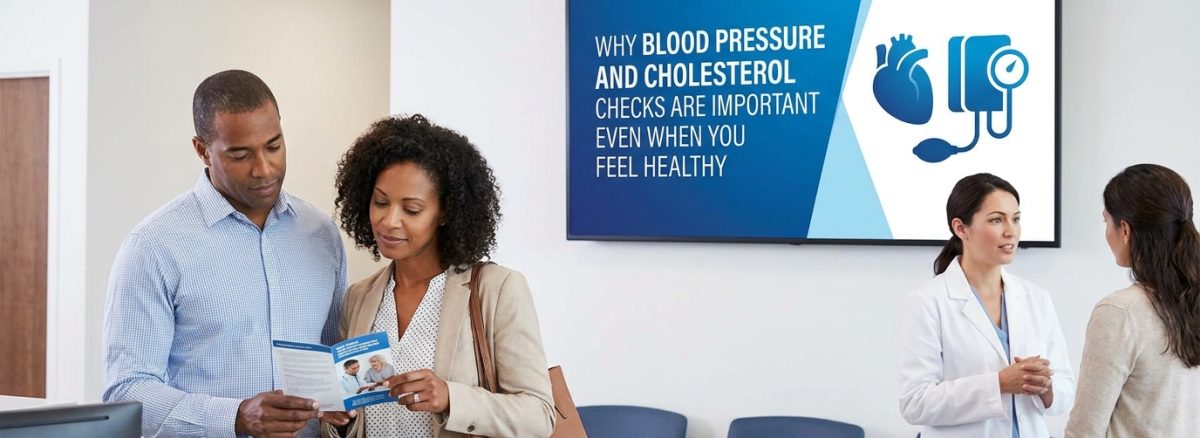
Feeling healthy does not always mean that your body is free from health risks. Some conditions, including high blood pressure and high cholesterol, can develop quietly without causing noticeable symptoms. Regular blood pressure and cholesterol checks can help identify these hidden risks early, allowing you and your healthcare provider to take preventive action. Routine screening is an important part of preventive healthcare because it can support better heart health and reduce the risk of serious complications over time.
Why Blood Pressure Checks Matter
Blood pressure measures the force of blood against the walls of your arteries. When blood pressure remains too high, it can place extra strain on the heart and blood vessels.
High Blood Pressure Can Be Silent
One of the main reasons regular blood pressure screening is important is that high blood pressure often has no obvious symptoms. A person may feel energetic and healthy while their blood pressure is gradually increasing. Without routine checks, elevated blood pressure can go unnoticed for years.
Protecting Long-Term Heart Health
Consistently high blood pressure can increase the risk of heart disease, stroke, kidney problems, and other complications. Checking your blood pressure regularly helps healthcare professionals identify concerning patterns and recommend appropriate lifestyle changes or treatment when needed.
Why Cholesterol Checks Are Important
Cholesterol is a type of fat-like substance that your body needs for important functions. However, having unhealthy cholesterol levels can contribute to plaque buildup in the arteries.
Cholesterol Problems May Have No Symptoms
Like high blood pressure, high cholesterol usually does not cause noticeable symptoms. You cannot reliably determine your cholesterol level based on how you feel. A blood test is generally needed to evaluate cholesterol levels and help assess cardiovascular risk.
Understanding Your Heart Disease Risk
A cholesterol test can measure different types of cholesterol and other blood fats. Your healthcare provider can consider these results along with factors such as age, family history, lifestyle, blood pressure, and other health considerations to better understand your overall risk.
How Regular Screening Supports Preventive Care
Routine health screenings provide an opportunity to identify potential problems before they become more serious. Blood pressure and cholesterol screening can also encourage healthier daily habits.
Lifestyle Changes Can Make a Difference
If your results are higher than recommended, your healthcare provider may discuss strategies such as eating a balanced diet, exercising regularly, maintaining a healthy weight, limiting excess sodium, avoiding tobacco, and managing stress. Depending on your individual risk, medication may also be recommended.
Your Screening Schedule May Vary
The appropriate frequency of blood pressure and cholesterol checks depends on factors such as age, personal health history, family history, existing risk factors, and previous test results. Your healthcare provider can recommend a screening schedule that fits your needs.
Conclusion
Regular blood pressure and cholesterol checks are valuable even when you feel completely healthy because many cardiovascular risk factors can develop without noticeable warning signs. Early detection gives you and your healthcare provider more opportunities to monitor changes, improve lifestyle habits, and consider treatment when appropriate. If you live in New Braunfels, TX, making routine screenings part of your preventive healthcare plan with a trusted local healthcare provider can be an important step toward protecting your heart and supporting better long-term health.
Leave feedback about this