
Table of Contents
Introduction
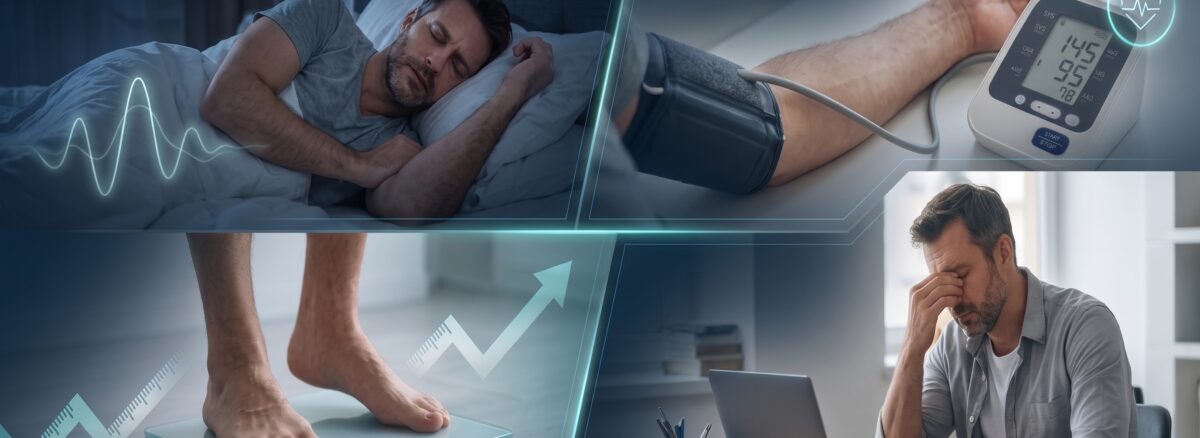
Sleep apnea is a sleep-related breathing disorder that can affect more than the quality of your nighttime rest. When breathing repeatedly stops and starts during sleep, the body may experience brief periods of reduced oxygen and repeated interruptions in normal sleep cycles. Because these changes can happen while a person is asleep, many adults may not realize that a problem exists. Over time, undiagnosed sleep apnea may affect blood pressure, make weight management more difficult, and contribute to low energy during the day.
How Undiagnosed Sleep Apnea Can Affect Blood Pressure
During an episode of sleep apnea, breathing can become restricted or temporarily stop. This can cause oxygen levels to fall and trigger the body’s stress response. As breathing resumes, the nervous system may become more active, which can cause temporary increases in heart rate and blood pressure.
When these episodes occur repeatedly throughout the night, the cardiovascular system may experience this stress again and again. Untreated sleep apnea has been associated with high blood pressure and other cardiovascular concerns.
Adults who have high blood pressure that is difficult to control, especially when combined with loud snoring or nighttime breathing problems, may benefit from discussing possible sleep apnea with a healthcare professional.
Why Sleep Apnea May Make Weight Management More Difficult
Weight and sleep apnea can influence each other. Excess weight can increase the likelihood of obstructive sleep apnea, while untreated sleep problems may make healthy weight management more challenging.
Poor-quality sleep can affect appetite, food choices, and motivation to remain physically active. Someone who wakes repeatedly during the night may feel less prepared to exercise or follow healthy routines the next day. Over time, reduced activity and changes in eating habits can contribute to unwanted weight gain.
This does not mean sleep apnea is the only cause of weight gain. Nutrition, activity, medications, medical conditions, stress, and other factors can also influence body weight. However, identifying an untreated sleep disorder can be an important part of a broader approach to weight management.
How Sleep Apnea Can Reduce Daily Energy
One of the most noticeable effects of undiagnosed sleep apnea may be feeling tired despite spending enough time in bed. Repeated breathing interruptions can prevent the body and brain from getting consistent, restorative sleep.
During the day, this may appear as:
- Persistent tiredness or low energy
- Difficulty concentrating
- Reduced alertness
- Trouble staying focused at work
- Morning headaches
- Feeling sleepy during routine activities
The National Heart, Lung, and Blood Institute notes that daytime sleepiness, tiredness, fatigue, and concentration problems can occur with sleep apnea.
When Should You Consider a Sleep Evaluation?
Loud or persistent snoring does not always mean someone has sleep apnea, but it can be a reason to discuss sleep health with a healthcare provider. Other signs may include waking up gasping, witnessed pauses in breathing, frequent nighttime awakenings, unexplained daytime fatigue, or high blood pressure.
A healthcare provider can review your symptoms and medical history and determine whether a sleep study or additional evaluation may be appropriate. Sleep testing can help identify whether sleep apnea or another sleep disorder is affecting your health.
Conclusion
Undiagnosed sleep apnea can have effects that extend beyond nighttime breathing problems. Repeated sleep disruptions may place additional stress on the cardiovascular system, make weight management more challenging, and leave you feeling tired or unfocused during the day. Recognizing possible warning signs and seeking appropriate evaluation can help identify the underlying problem and support better long-term health. For adults in New Braunfels, TX, discussing persistent snoring, daytime fatigue, blood pressure concerns, or unexplained difficulties with weight management with a healthcare provider can be an important step toward understanding whether a sleep disorder may be contributing to these concerns.
Leave feedback about this